Weight Loss Trends 2026: What Actually Works Now

The weight loss trends 2026 has brought to the surface are genuinely exciting, but they come with a lot of noise. New medications are making headlines, nutrition science has been quietly updated, and the fitness world is rethinking what it even means to get results. If you have been sorting through conflicting advice about GLP-1 drugs, protein targets, and habit change, you are in the right place. We are going to cut through the hype and give you a clear picture of what the latest science actually supports, and what it means for your real life.
Table of Contents
Key takeaways
Point | Details |
GLP-1 medications are powerful but not standalone | Medications work best when combined with nutrition support and behavioral coaching for lasting results. |
Protein targets have been updated for 2026 | Aim for 1.6 to 2.2 grams of protein per kilogram of body weight daily to protect muscle during weight loss. |
Fitness has shifted to strength over calorie burn | Resistance training is now the priority for anyone losing weight, especially on medication. |
Rapid weight loss can work when structured | A 2026 trial found structured rapid loss outperformed gradual approaches at the one-year mark. |
Behavioral micro steps matter more than you think | Small, sustainable habit changes layered alongside medication produce better long-term outcomes than medication alone. |
The GLP-1 era and medical weight loss in 2026
If you have not heard the term “GLP-1 medications” yet, get familiar. Drugs like semaglutide (sold as Ozempic and Wegovy), tirzepatide (Mounjaro and Zepbound), and liraglutide (Saxenda) are glucagon-like peptide-1 receptor agonists. They work by mimicking a natural gut hormone that signals fullness, slows digestion, and reduces appetite. The result is a significant and consistent reduction in caloric intake without the white-knuckle willpower struggle.
The WHO now recommends GLP-1 therapies for long-term obesity management in adults, but with a critical condition. They must be paired with behavioral support. These are not cures. They are powerful tools that still require you to build the lifestyle that makes the results stick.
The next generation: triple-agonist drugs
Beyond the medications we already know, the research pipeline is producing something even more remarkable. Retatrutide, a triple-agonist drug targeting three metabolic hormones at once, showed average weight loss of 28.7% over 68 weeks at the 12mg dose. That is approaching bariatric surgery territory. Nearly 73% of participants lost 20% or more of their body weight. These are numbers the medical community has not seen before from a pill.
That said, the medical community is appropriately cautious. Long-term safety data beyond two years is still limited, and guidelines calling for lifelong use are considered premature by many researchers. Cost and accessibility remain real barriers. The headline numbers are exciting, but the practical reality of weight loss innovations like these is that they work best as part of a complete care plan, not in isolation.
Nutrition science update: protein, fiber, and muscle
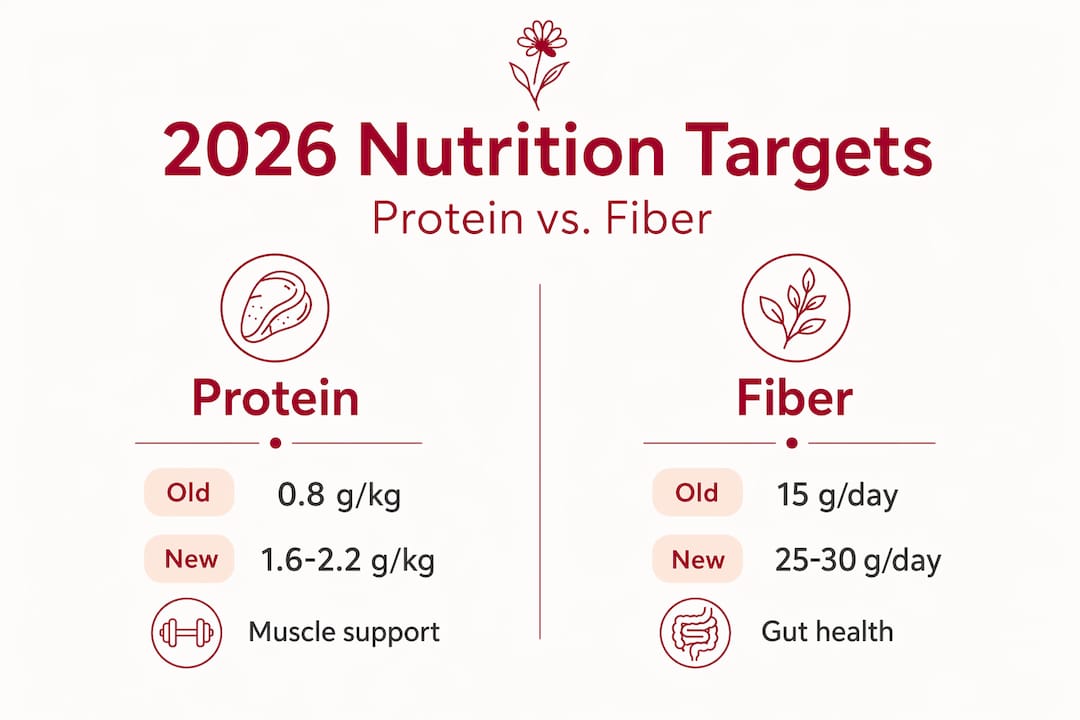
Here is where a lot of people quietly go wrong on medication. When you eat significantly less, your body does not just burn fat. It will pull from muscle tissue too, especially if your protein intake is low. The 2026 nutrition guidance is specific about this: the old recommended dietary allowance of 0.8 grams of protein per kilogram of body weight is not enough for someone actively losing weight.
The updated target is 1.6 to 2.2 grams per kilogram of body weight per day. For a 160-pound woman, that translates to roughly 116 to 160 grams of protein daily. That is a meaningful shift, and it requires real meal planning. Think eggs, Greek yogurt, cottage cheese, lean meats, and protein-forward snacks throughout the day.
Fiber and gut health
Fiber is the other underdog of healthy eating trends 2026. Aiming for 25 to 30 grams per day supports satiety and gut health, but the way you get there matters. Rapid fiber increase causes GI distress in many people, including bloating, cramping, and digestive disruption. Add it gradually. A practical rule of thumb is to add about 5 grams per week until you reach your target.
Pro Tip: If you are hitting more than four bowel movements a day, your fiber increase is moving too fast. Pull back slightly and build more slowly.
Here is a quick comparison to show where most women land versus where the science points in 2026:
Nutrient | Common intake | 2026 target for weight loss |
Protein | 0.6 to 0.8 g/kg | 1.6 to 2.2 g/kg |
Fiber | 10 to 15 g/day | 25 to 30 g/day |
Hydration (water) | Inconsistent | Minimum 2 to 2.5 liters/day |
Going beyond 2.2 grams per kilogram of protein does not further boost muscle synthesis and just adds unnecessary calories. More is not always better. Hit the range, not beyond it.
Behavioral and fitness trends for lasting results
The fitness world has made a significant pivot in 2026, and if you are still thinking about exercise purely as a way to burn calories, you are working with an outdated model. NASM reports trainers are now focused on protecting muscle and metabolic function for clients on GLP-1 medications. The shift is real and it matters for everyone, not just people on drugs.
Here is what that looks like in practice for emerging fitness trends 2026:
Progressive resistance training takes priority. Lifting weights two to four times per week protects the muscle you are keeping while fat is lost. Cardio supports heart health but should not replace strength work.
Recovery is programmed, not skipped. Sleep and rest days are now treated as training variables, not laziness. Inadequate recovery increases cortisol and breaks down muscle.
Movement snacks replace marathon gym sessions. Short bursts of activity throughout the day, like a 10-minute walk after meals, support blood sugar regulation and keep energy steady.
Coaches work with medication, not around it. Personal trainers in 2026 are learning pharmacology basics. Understanding how GLP-1 drugs reduce appetite changes how trainers program nutrition timing and training intensity.
Pro Tip: If you are on a GLP-1 medication and struggling with low energy during workouts, you likely need more protein before training. Try 20 to 30 grams about 60 to 90 minutes before your session.
One of the more surprising findings in the weight loss strategies for 2026 comes from a recent clinical trial. Rapid, structured weight loss outperformed gradual approaches at the one-year mark for sustained outcomes. This challenges the long-standing “slow and steady wins” mantra. The key word, though, is structured. Rapid loss driven by a supervised program with nutrition support is very different from crash dieting.
The microstep method
Behavioral research supporting popular weight loss diets 2026 keeps circling back to one concept. Small, manageable habit changes layered consistently over time produce better long-term results than dramatic overhauls. Microstep behavioral changes work because they are low friction. Instead of overhauling your entire diet on day one, you add one habit per week. Drink water before each meal. Walk for 10 minutes after dinner. Swap one processed snack for a protein option. These changes compound.
Risks, misconceptions, and what no one tells you
The biggest misconception about future weight loss methods in 2026 is that medication handles everything. It does not. Weight loss drugs show 14 to 20% loss over 72 weeks, which is genuinely impressive. But weight rebounds four times faster after stopping medication compared to behavioral programs. That number should get your attention.
Here is what actually goes wrong when people treat medication as a standalone fix:
Muscle loss goes unchecked. Without resistance training and adequate protein, muscle loss occurs alongside fat loss on GLP-1 drugs. This slows metabolism and sets you up for faster rebound.
Behavioral patterns do not change. The appetite suppression is real while you are on the drug. The food environment around you is still the same when you stop.
Side effects are real. Nausea, fatigue, and GI symptoms are common, especially early on. These are manageable but require support and honest conversations with your provider.
Cost and access create stress. For many women, staying on medication long-term is not financially sustainable. A plan that integrates behavioral strategies from day one protects your results if and when you stop.
“The goal is not to be on medication forever. The goal is to use it as a window to build habits that last.”
This is why wraparound care matters so much. Medication is one piece. Nutrition coaching, behavioral support, and community accountability fill in the gaps that a drug alone simply cannot reach.
My take on what actually moves the needle in 2026
I have watched a lot of women start strong with the newest medications and hit a wall six months in. Not because the drug stopped working, but because the other pieces were never put in place. In my experience, the women who keep their results long-term are the ones who treat the medication as a starting advantage, not a finish line.
What I have found matters more than anything else is muscle. The scale does not tell you whether you are losing fat or muscle, and that difference is enormous for how you look, feel, and keep weight off years from now. I encourage every woman I work with to pick up heavier things, eat more protein than she thinks she needs, and stop measuring success only in pounds.
The other thing I feel strongly about is that small, consistent wins beat dramatic transformations every time. I have seen women lose 60 pounds in a year by stacking microsteps. I have also seen women lose 30 pounds fast, skip the habit-building, and gain it back in six months. Pace matters less than sustainability. The Wildflower weight loss blog covers this in depth with real stories and updated research, and I recommend it as a resource if you want to keep learning.
Be patient with yourself. Be proud of every single step. And please, do not skip the resistance training.
— Anne Noe, NP
How Wildflower Weight Loss supports your 2026 weight loss goals
At Wildflower Weight Loss, we built our virtual program around exactly what the 2026 science supports. We are a women-designed program for women, and we know how much it matters to have a plan that actually fits your life. We offer weight loss medications including Mounjaro, Zepbound, Ozempic, Wegovy, Saxenda, Semaglutide, Tirzepatide, and more, all supported by secure texting with your provider and weekly virtual weigh-ins.
But we do not stop at medication. Our customizable dietary system is built on the protein and fiber targets that protect your muscle and fuel your results. Our AI-personalized training programs reflect the emerging fitness trends 2026 research supports, with a focus on strength and metabolic health. And our weekly live group coaching calls, live video open office hours, and monthly Girl’s Nights mean you are never doing this alone.
If you are ready to take the next step with a virtual weight loss program designed to support you for the long haul, we would love to have you. You can also explore our available challenges and programs to find the right starting point for where you are right now. We are here for all of it.
FAQ
What are the biggest weight loss trends in 2026?
The top weight loss trends in 2026 center on GLP-1 medications paired with behavioral support, updated protein and fiber targets, and a fitness shift toward resistance training and muscle preservation over pure calorie burn.
How do GLP-1 medications work for weight loss?
GLP-1 medications mimic a gut hormone that signals fullness, slows digestion, and reduces appetite, resulting in consistent caloric reduction. The WHO recommends their use for long-term obesity management alongside lifestyle changes, not as a standalone solution.
Will I regain weight after stopping weight loss medication?
Yes, weight often rebounds after stopping GLP-1 medications, and research shows it returns four times faster than with behavioral programs alone. Building sustainable nutrition and exercise habits during your time on medication is the best protection against rebound.
How much protein do I need when losing weight in 2026?
Current guidance for 2026 recommends 1.6 to 2.2 grams of protein per kilogram of body weight per day during active weight loss. This protects muscle tissue and supports metabolism, especially for women on GLP-1 medications.
Is rapid weight loss actually safe and effective?
A 2026 clinical trial found that rapid, structured weight loss produced better one-year outcomes than gradual approaches. The key is structure and supervision, not crash dieting. A program with nutritional and medical support makes rapid loss both safer and more sustainable.
Recommended